Family and Cultural Activities to Do in Gandia:
Territorio Borgia, Stop by Stop
Construction of the Gothic-style Collegiate Church of Santa María began in the late 14th century and was completed around 1500, after several interruptions. The person who truly drove the project forward was María Enríquez de Luna, the widow of two Borgia dukes, and in 1499, Pope Alexander VI—who was a Borgia—granted it the title of collegiate church. Saint Francis Borgia was baptized there. Legend has it that a young woman died when a stone ornament from the rose window fell on her, and that is the origin of the saying “more delicate than La Delicà de Gandia.”
The Convent of the Poor Clares was founded in 1431 by Violante of Aragon, daughter of the Duke of Gandia. Over time, María Enríquez de Luna herself entered the convent as a nun under the name Sister Gabriela and became abbess in 1530; her daughter, Francisca de Jesús de Borja, served as abbess from 1533 to 1548. Tradition holds that Saint Francis de Borja planted an olive tree in the courtyard. Today it is a cloistered convent, and much of its art collection—including works by Paolo de San Leocadio and Juan de Juanes—can be seen at the Museum of the Poor Clares, located within the MAGa.
The MAGa Archaeological Museum is housed in the former Hospital de Sant Marc, founded in the 14th century by Alfons el Vell, the first Duke of Gandia, to care for the sick, the poor, and travelers. It operated continuously for more than 600 years, until 1973, and was converted into a museum in 1972. Inside, there are more than 5,000 engraved or painted Paleolithic flakes from the Cova del Parpalló, considered the most important Paleolithic collection in Europe, as well as artifacts from the Cova del Bolomor showing evidence of the controlled use of fire more than 250,000 years ago.
The Palau Ducal dels Borja, the jewel of Gandia. Its originsdate back to 1323, when King James II granted the lordship of Gandia to his son. In 1485, Rodrigo de Borja—the future Pope Alexander VI—purchased the duchy for his son Pedro Luis, and from then on, the family expanded and transformed the building during the 15th and 16th centuries. It is the birthplace of Saint Francis de Borja, and his bedroom has been preserved exactly as it was. Today, visitors can explore the 17th-century Golden Gallery, featuring original tiles, as well as several rooms with oil-painted ceilings.
The Mirador del Serpis and the Passeig de les Germanies run alongside the river that flows through the city. Until the 1940s, the Serpis was a much more powerful river, and the construction of the Beniarrés Reservoir changed the landscape and created the space where the promenade now runs; inaugurated in 2011, it connects the Ducal Palace, the convent, and the archaeological museum.
Casa de la Cultura, formerly the Casa de la Marquesa
Right in the heart of Gandia stands the Casa de la Cultura, which everyone in the city still calls the Casa de la Marquesa. It was built in the late 19th century by the Vallier Lapeyre brothers, a bourgeois family of French origin who had settled in Gandia, and for years it served as their private residence. The building features a defensive-palatial style, with a symmetrical façade flanked by towers, a marble staircase inside, and a romantic garden. In 1980, the family donated the house to the Caja de Ahorros de Valencia, and in 2000 it was inaugurated as the Casa de la Cultura, hosting exhibitions, lectures, and concerts throughout the year.
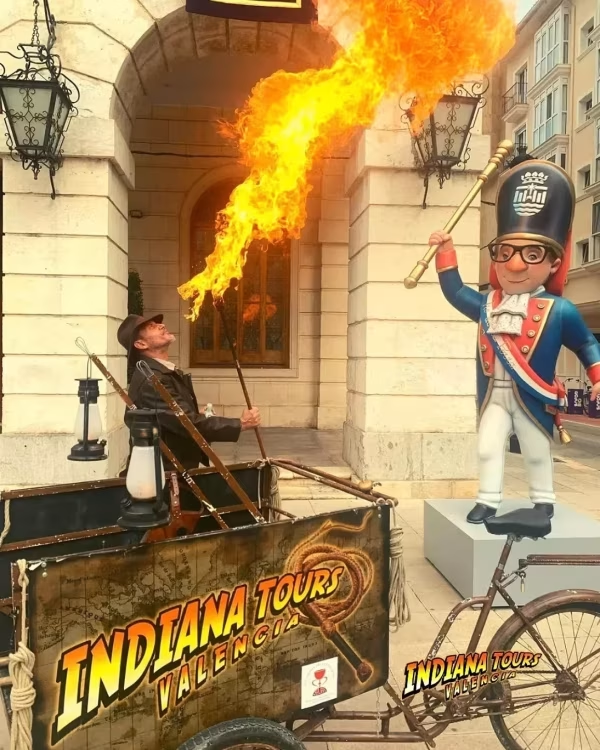
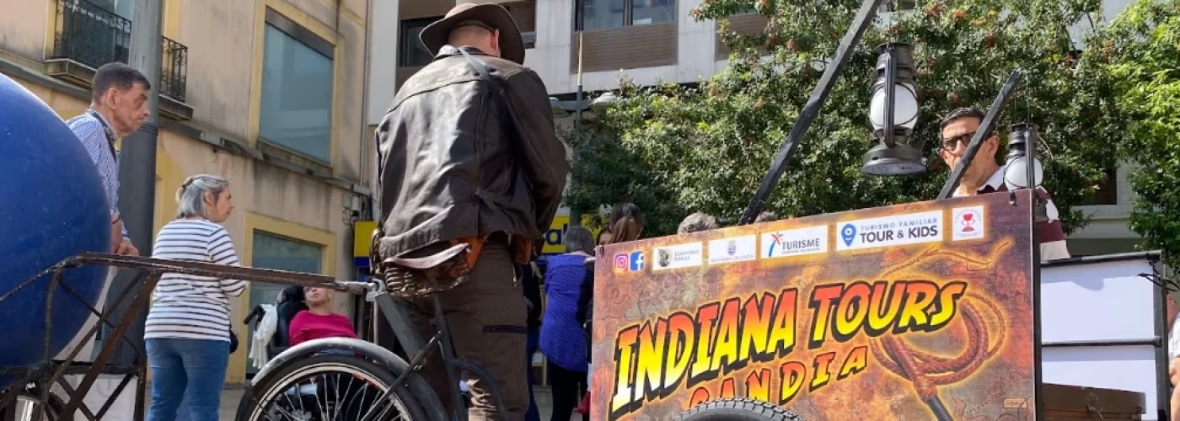
To conclude the tour, across from the Casa de Cultura, stands the Tío de la Porra—the herald that, since 1871, has announced the start of the Fira i Festes de Gandia each year— and which is part of the Indiana Tours route.
Destapa’t, Gandia’s Tapas Route
If your visit falls on a Thursday, you can experience “Destapa’t,” the tapas tour that winds through the historic center and Plaza del Prado. In its 2026 edition, the event takes place every Thursday from March 5 through the end of the year, with a break during the summer months. Each tapa with a drink costs starting at €5, and this year an interactive map with a QR code is used to locate the participating establishments.
Beach and Mountains, Just a Stone’s Throw from Downtown
Gandia has the advantage of having it all nearby: the beach and the mountains without having to travel far. Gandia’s beach is spacious and easy to combine with any day trip. And if your group is looking for something more active, the Mondúver range offers trails for all skill levels: starting from La Drova in Barx, there’s a short, easy option of about 3 km, ideal for families with children; and for those seeking a greater challenge, there’s the PR-CV 153 trail starting from Xeresa, which is about 11 km long with an elevation gain of 762 meters.
The Monastery of Sant Jeroni de Cotalba
On the outskirts of Gandia, in the municipality of Rótova, lies the Monastery of Sant Jeroni de Cotalba. It was founded in 1374 by a group of hermits settled on the Xàbia plain, with permission from Pope Gregory XI, although it now stands on a different site: in 1388, Alfonso of Aragon, Duke of Gandia and Marquis of Dénia, purchased the land in Cotalba to relocate the community there following a pirate attack. During the 16th century, the monastery came under the protection of the Dukes of Gandia—the Borgias—with María Enríquez de Luna herself as its principal patron, and it was even visited by Philip II in 1586 and by Philip III later on. It is another piece of the same puzzle: that of an entire region marked by the Borgias’ legacy.
The thread connecting Valencia, Peñíscola, and Gandia
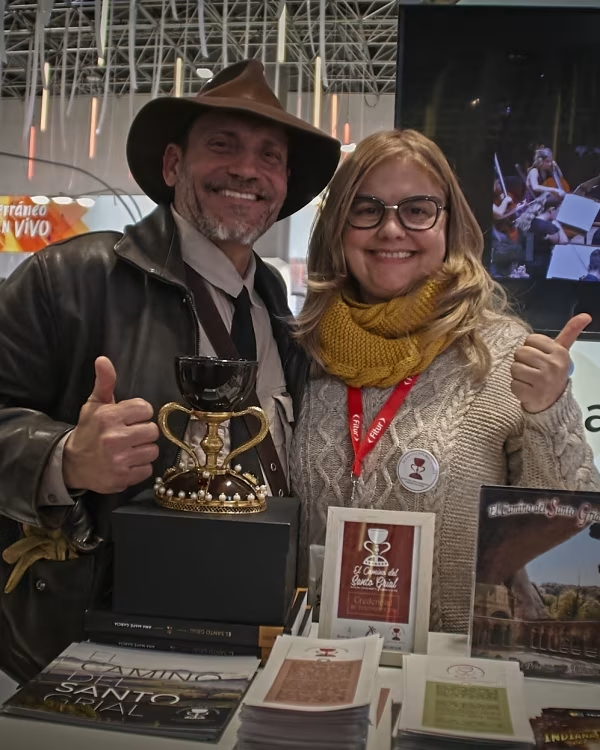
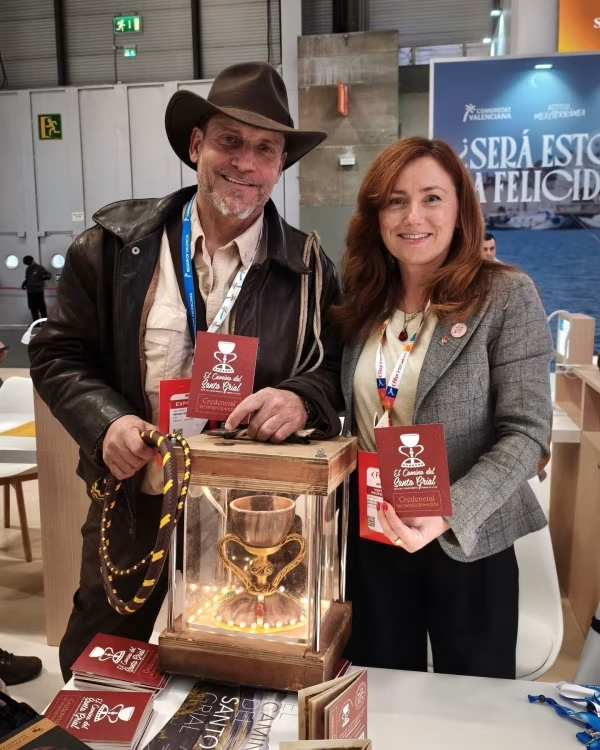
Our own adventure tells us that the Holy Grail—the cup from the Last Supper kept in Valencia Cathedral—passed through Gandia in 1808 while fleeing Napoleon’s troops. It is the same thread that connects our three tours—in Valencia, Peñíscola, and Gandia—and the reason why, in Territorio Borgia, Indiana Jones is also on the trail of the Grail, not just the Borgia legacy.
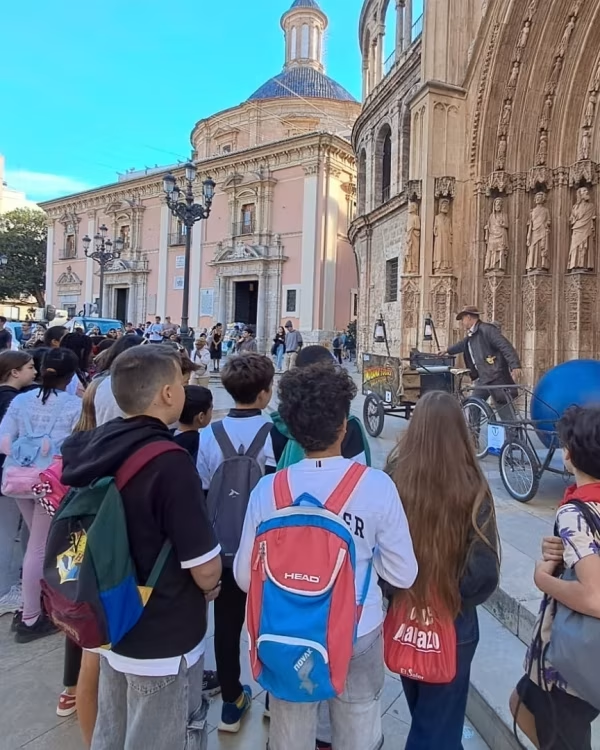
A dramatized walking tour through Gandia’s historic center, lasting about two hours, with Jaco Müller bringing a flesh-and-blood Indiana Jones to life as he unveils the secrets of the Borgias and the city’s history. The tour begins at Plaça de les Escoles Pies and connects some of these points.
Here’s what the experience is like
Territorio Borgia is a school field trip and a cultural and adventure group tour, designed for students of all ages and for teachers, lasting about two hours, available in Valencian, Spanish, English, and German, in the morning, at noon, or in the afternoon. It is a 100% accessible route, certified with the Accessible Tourism Seal by PREDIF and Turisme Comunitat Valenciana, and we have specific experience working with groups with physical and intellectual disabilities—a demographic in which we have specialized since 2021. The project received the 2023 CreaTurisme Award and the 2022 Innovation Award from the El Camino del Santo Grial Cultural Association, and has nearly 2,000 online reviews.
Many of these tours are recommended by Tour & Kids, including the Indiana Jones-themed excursion in search of the Holy Grail.
Request the brochure for this activity
If you’d like to experience this adventure with your students, your group members, or your association for people with intellectual disabilities, request the Territorio Borgia information packet. Email us at info@indianatoursvalencia.com or contact us via WhatsApp here, and we’ll prepare a personalized, no-obligation quote based on your group size and language.